Month: September 2026

Birmingham expert chairs Independent Commission on safe AI adoption in healthcare

A Birmingham clinical academic has co-chaired a new report setting out how the NHS can adopt AI innovations while maintaining public trust and patient safety.

Professor Alastair Denniston of BHP founder-member the University of Birmingham has chaired the National Commission into the Regulation of AI in Healthcare which has published its recommendations on how the UK can strengthen the regulation of AI in healthcare – ensuring it remains safe, keeps pace with innovation, and continues to earn people’s trust.

AI is already used in the NHS to spot serious health problems early, for example strokes and skin cancers, and to free up clinicians’ time through voice-enabled technologies. The Commission’s recommendations aim to help more patients benefit safely and quickly, by supporting the UK to become the best place for innovators to build and safely test AI, the best place for healthcare professionals to use it and – most importantly – the best place for patients to engage with it in their care.

Professor Denniston, who Chairs the National Commission into the Regulation of AI in Healthcare, said: “We innovate because we believe tomorrow’s healthcare can be better than today’s. But any new innovation – including AI – needs to earn its place and earn our trust. These technologies need to show that they are safe, effective and bring benefits to patients, staff and the wider NHS, without leaving people behind.

“Over the past year we have heard from more than 12,000 people, including patients, carers, clinicians and the technologists building AI tools. One message came through clearly: people are open to AI improving their care, but only if it is safe, overseen by humans, and if they know when it is being used. These recommendations are designed to make that trust possible, so that the UK can lead the world not just in developing AI for healthcare, but in showing how it can be regulated and used responsibly.”

Among the key recommendations in the report, the Commission proposes a pathway for faster access to safe and effective AI.

The Commission recommends that the MHRA introduce staged authorisations for new AI models, similar to ‘L-plates’ for learner drivers. New models would be deployed under close supervision and tight guardrails, allowing them to demonstrate real-world safety and performance before being granted fuller authorisation. This staged approach is designed to give UK patients world-first access to promising new models, while ensuring risk is carefully controlled at every step.

Other recommendations include:

  • Continuous, real-world monitoring throughout a device’s lifecycle. Rather than a single, point-in-time approval, the Commission recommends that AI-enabled medical devices should be subject to continuous, real-world monitoring throughout their working life;
  • Public access to safety information. The Commission also recommends that members of the public should be able to easily search for information about the safety of specific AI-enabled medical devices, including any adverse incidents; and
  • Tougher powers to protect patients. The Commission recommends stronger powers for the MHRA, including enhanced enforcement powers, to ensure that where AI systems fall short of the standards patients expect, the regulator can act decisively.

Professor Henrietta Hughes, NHS General Practitioner, Deputy Chair of the National Commission and Patient Safety Commissioner for England, said: “Patients have told us that to trust AI is safe, they want to know when it’s used, that it supports rather than replaces clinicians, and that there is clear accountability if things go wrong. That’s exactly what our recommendations deliver.

“Putting people before technology to improve care and give clinicians more time to meet patients’ needs. That’s how we can keep people safe and build the health system’s confidence to embrace AI’s full potential.”

Lawrence Tallon, the MHRA’s Chief Executive said: “I welcome this authoritative and independent report which sets out in more detail than ever before how we should best regulate AI in healthcare.

“We have heard clearly about the opportunities of AI to speed up and improve care, and to release more of clinicians’ time for the essentially human aspects of their work with patients.

“We will only realise those opportunities if we have a modern, dynamic regulatory framework that accelerates safe adoption, protects patients and commands public and professional confidence. I am so grateful to the many people who contributed to this expert Commission to set out the roadmap ahead.”

The independent Commission was established by the Medicines and Healthcare products Regulatory Agency (MHRA) in September 2025 and includes diverse expertise across health, regulation and AI, including international contributors from around the world including the USA and Singapore.

The Commission gathered evidence from more than 12,000 people over the course of a year, including patients, the public, clinicians, healthcare leaders, industry and technology developers, making it the largest engagement of its kind ever undertaken in the UK on the regulation of healthcare technology. Additional in-depth deliberative research by research partner the Health Foundation with members of the UK public, published today, provided detailed insight into the UK public’s priorities and expectations for the regulation of AI in healthcare.

Taken together, that engagement found broad public support for AI in healthcare, with clear conditions: strong safety standards, meaningful human oversight, and transparency about when and how AI is being used in someone’s care. The Commission’s recommendations respond directly to these views.

Non-invasive test identifies more than 9 in 10 bladder cancers, clinical study finds

More than 9 in 10 patients who had bladder cancer were picked up through a non-invasive urine test after urgent referral, a new study has found.

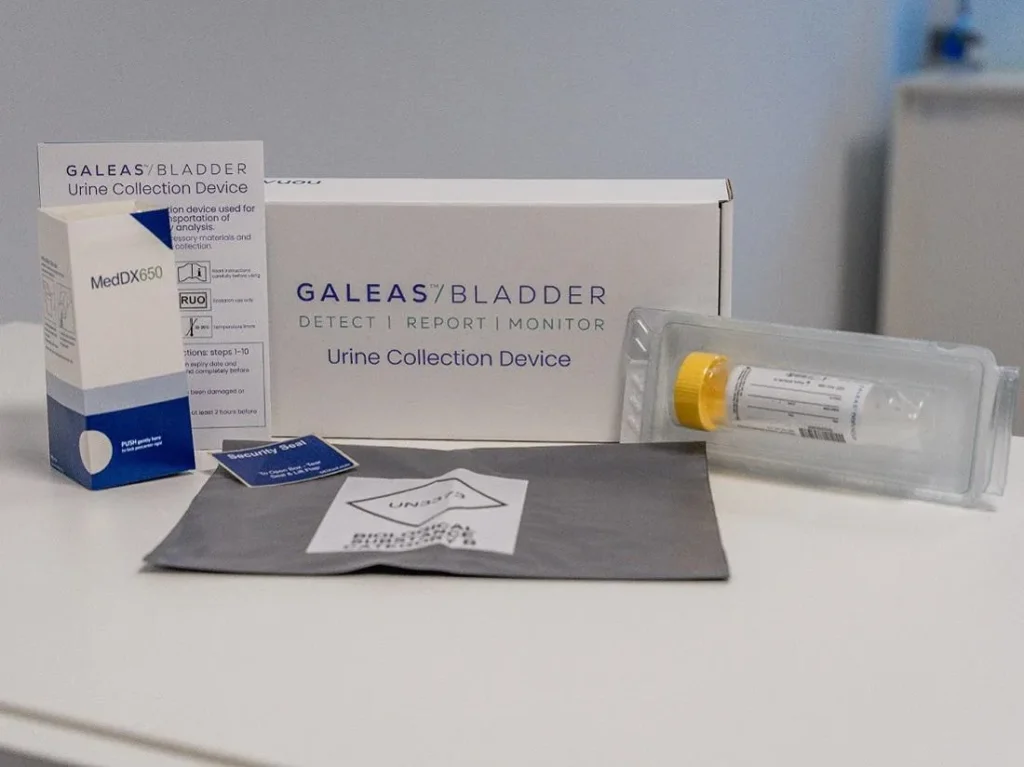
Study of 964 patients across seven NHS urology units found that the test detected 71 of 77 bladder cancers (92.2%) among the nearly 1,000 patients. The study, led by the University of Birmingham and Nonacus Ltd, investigated the real-world significance of testing for bladder cancer using a commercially available urine test –  GALEAS™ Bladder, which tests genomic information from a patient’s urine for traces of bladder cancer.

The peer-reviewed results have been published in European Urology Oncology, and showed significant results for detecting cancer as well as its use as a screening tool.

GALEAS Bladder detected all 17 muscle-invasive bladder cancers (100%) and 35 of 36 high-grade cancers (97.2%) diagnosed during the study. Meanwhile, a negative result was associated with a 99.3% probability of not having bladder cancer.

For the 30% of patients in the study with blood in their urine but which was not visible to the naked eye (non-visible haematuria), GALEAS Bladder identified all bladder cancers (100%) with a negative result associated with a 100% probability of not having bladder cancer.

Professor Richard Bryan, Director of the University of Birmingham’s Bladder Cancer Research Centre and co-author of the study, said: “We have spent many years developing and evaluating the science behind detecting bladder cancer through DNA in urine with support from Cancer Research UK and philanthropists, ultimately leading to the development of the GALEAS Bladder test by Nonacus. This prospective study shows that the very promising early performance has now been reproduced across multiple NHS centres and in a large real-world patient population.

“GALEAS detected 35 of 36 high-grade cancers and every muscle-invasive cancer diagnosed in the study. These results show that molecular urine testing can be used now to help clinicians decide which patients need an urgent cystoscopy and which can safely have that procedure deferred.

“The results are very significant for clinical practice. Only 8% of patients in the study were ultimately diagnosed with bladder cancer, which highlights the challenge facing NHS haematuria services where large numbers of patients currently enter the same urgent diagnostic pathway despite most not having cancer. GALEAS is a promising and less invasive test that can be easier to administer and make testing and screening for bladder cancer far easier.”

The GALEAS test was used in the study alongside a typical way to test for bladder cancer using a technique called cystoscopy. In a cystoscopy test, a camera is passed through the urethra to examine the bladder. The procedure is an important part of bladder cancer diagnosis, but Professor Bryan, a former clinical urologist, notes that the procedure is invasive and resource intensive.

GALEAS Bladder uses DNA found in a urine sample to help clinicians identify patients at greater risk who should be prioritised for urgent cystoscopy, while allowing cystoscopy to be deferred for some patients at lower risk where clinically appropriate.

Lee Silcock, Co-founder and Chief Product Officer at Nonacus and co-author of the study, said: “Seeing GALEAS perform so strongly across almost 1,000 patients in seven NHS urology departments is extremely encouraging. This is real-world evidence from the patients and pathways the test has been designed to support.”

“What matters most is identifying those most likely to have cancer sooner, while giving clinicians confidence when deciding which patients can safely wait for a cystoscopy. The fact that the test detected every muscle-invasive cancer in the study, alongside a negative predictive value of more than 99%, gives us further confidence in the role GALEAS can play in supporting NHS diagnostic pathways.”

The study also found that incorporating urine-based testing in bladder cancer pathways could reduce the burden on urology departments. At the most cautious pre-specified clinical threshold, using GALEAS Bladder to triage patients was estimated to result in 730 fewer urgent cystoscopies for every 1,000 patients, compared with urgent cystoscopy for everyone, with no loss of net clinical benefit.

GALEAS Bladder is already being used within NHS pathways in England and Wales, with further NHS sites adopting the test as clinical use expands.