BHP researchers find new approach to detect meningitis and encephalitis

New research led by Aston University’s Dr Ghaniah Hassan-Smith has found a new technique to diagnose infections of the central nervous system, such as meningitis and encephalitis, which can be difficult to determine using conventional methods.

The method developed by Dr Hassan-Smith, clinical senior lecturer at Aston Medical School, and honorary consultant neurologist at University Hospitals Birmingham (UHB) and her BHP collaborators, is based on metagenomic sequencing – an existing and extremely sensitive genetic test – combined with a new and unique computational ‘filtering’ system to identify likely disease-causing bacteria and viruses from the complex information generated.

The cross-BHP research team included Dr Zaki Hassan Smith, clinical associate professor at Aston Medical School and consultant endocrinologist at UHB, and collaborators at the University of Birmingham – Professor Nicholas Loman, director of the Institute of Microbiology and Infection, Dr Joshua Quick, UKRI Future Leaders and Dr Nicola Cumley, clinical scientist.

Central nervous system infections can be serious and require rapid diagnosis and treatment. Usually, such infections are diagnosed by taking cerebrospinal fluid by lumbar puncture and combining knowledge of the patient’s symptoms with laboratory tests such as microscopy, microorganism culture and targeted polymerase chain reaction (PCR) tests for particular organisms. This requires the medical team to have some knowledge of what they are looking for.

In a substantial proportion of patients with a suspected central nervous system infection (over 50% in some settings, such as intensive care), no causative pathogenic organism is identified. This may be because the pathogen is unexpected, present only in small amounts, or because antibiotics or antiviral treatment have already been started.

Rather than testing for individual pathogens, metagenomic sequencing analyses all the genetic material present in a sample, takes out all the unnecessary genomic data and identifies DNA and RNA and which microorganisms it is likely to have come from. This means medical staff can look for many different bacteria, viruses and other microorganisms simultaneously, including unusual or unexpected pathogens. This is particularly relevant for central nervous system infections, where there can be major diagnostic challenges.

The researchers tested cerebrospinal fluid samples from patients with central nervous system infections, sourced from UHB, and compared them with non-infectious neurological control samples.

Samples can also be contaminated with other microorganisms, for example those found on skin or in laboratory reagents. This can lead to signals which appear disproportionately important. Dr Ghaniah Hassan-Smith and the team developed a series of filters to remove this ‘background noise’ based on bioinformatics. This is a technique that uses computational methods to understand biological data, in this case, the DNA and RNA signals from the fluid samples.

The filters are able to separate potentially meaningful pathogen signals from this background noise and so determine what the infectious agent is. The method brings together several pieces of sequencing information rather than relying on a single result.

Dr Ghaniah Hassan-Smith said: “Central nervous system infections such as meningitis and encephalitis can be extremely serious, but in many patients we never identify the organism responsible. Conventional tests are very good at finding the pathogens we suspect, but metagenomic sequencing gives us the exciting possibility of looking much more broadly, including for unusual or unexpected causes of infection.

“The difficulty is that looking for everything also means finding a lot of noise. Not every microbial signal detected in a sample represents a genuine infection, so interpreting these very complex datasets is one of the major challenges in bringing metagenomic sequencing into clinical practice.

“This isn’t intended to replace conventional microbiology. Rather, we hope the work contributes to developing more standardised ways of interpreting metagenomic sequencing and ultimately helps move this powerful technology closer to routine clinical practice.”

To read the full paper, ‘Pathogen detection in central nervous system infections: moving metagenomic sequencing closer to clinical practice’ in BMC Infectious Diseases, visit https://link.springer.com/article/10.1186/s12879-026-13276-9.

Rapid genomic testing for brain tumours piloted in Birmingham

A world-first NHS pilot of a rapid genomic test that allows doctors to diagnose what type of brain tumour a patient has within 24 hours is being expanded across England, supported by a collaborative team in Birmingham.

Brain tumours are notoriously difficult to diagnose and treat, and there are more than 100 different types ranging from slow-growing tumours to aggressive cancers.

The standard diagnostic process involves MRI and CT scans followed by extracting a tumour sample. This is taken away for testing in a pathology lab which can take weeks to return a result and diagnose the tumour type.

The new test means that patients can receive a definitive brain tumour diagnosis in less than a day, rather than the current average of 26 days.

A two-year pilot has been made possible as part of a new Network of Excellence for Rapid Diagnosis in Brain Tumours, co-led by the NHS Central and South Genomic Medicine Service and NHS East Genomic Medicine Service, which has received £2.1m from NHS England. The pilot will explore the success and feasibility of offering the test within a clinical setting, with the aim of rolling out the test to all neuropathology centres in England to benefit all patients as soon as possible.

Dr Victoria Wykes, Associate Clinical Professor of Neurosurgery at the University of Birmingham and Honorary Consultant Neurosurgeon at Queen Elizabeth Hospital Birmingham (QEHB), is now Clinical Lead of the new Network of Excellence for Rapid Diagnosis in Brain Tumours. She said: “Achieving a rapid diagnosis of brain tumours represents an absolute game-changer for our patients. It will reduce the time that patients and their loved ones have to wait to understand what the life-changing diagnosis means and accelerate the speed of accessing treatment, therapies and clinical trials. The test can also allow surgeons to receive the diagnosis during operations to remove tumours, enabling them to tailor the surgery according to the tumour type while the patient is still in theatre.

“Partners across Birmingham’s Health and Life Sciences Quarter will come together to play a vital role in leading the clinical operational delivery of this new genetic test within the NHS, evaluating its use in clinical settings where it will hopefully have incredible results for patients in Birmingham and the Midlands.”

BHP’s founding members the University of Birmingham and University Hospitals Birmingham NHS Foundation Trust (which operates QEHB), have the existing infrastructure needed to rapidly analyse tumour samples during surgeries. This is thanks to an established tissue pipeline and significant genomics expertise in brain cancer, already used for research.

The Birmingham-based team from the hospital and university will lead on examining and evaluating how to make clinical practice of the new test a reality, focusing on health economics, implementation science and genomic training within the programme.

Clinical leadership for the Network of Excellence comes from the University of Birmingham and University Hospitals Birmingham, with scientific leadership from the University of Nottingham, whose researchers invented the test, and Nottingham University Hospitals Trust. Teams across these establishments, as well as the South-East and North Thames Genomic Medicine Services, have all had a significant role in shaping the Network of Excellence.

Further expanding on the importance of feasibility testing, Dr Wykes explained: “Through the strength of our network, we will seek to validate the effectiveness of the tools for rapid genomic diagnosis of brain tumours, and determine how we make rapid diagnosis work in the real world. By the end of the programme, we will be able to make recommendations for the tools to be commissioned by the NHS, helping to unleash the full potential of this new test.”

The NHS England pilot builds on the successful pilot already underway in Birmingham and Nottingham and will initially take the technology into five specialist centres before expanding further across England.

The first phase will introduce the testing across University Hospitals Birmingham NHS Foundation Trust, Nottingham University Hospitals NHS Trust, Great Ormond Street Hospital for Children NHS Foundation Trust, King’s College Hospital NHS Foundation Trust and Newcastle Hospitals NHS Foundation Trust.

Additional genomic laboratory sites in Bristol, Oxford, Leeds and Manchester will join in the second phase.

Non-invasive test identifies more than 9 in 10 bladder cancers, clinical study finds

More than 9 in 10 patients who had bladder cancer were picked up through a non-invasive urine test after urgent referral, a new study has found.

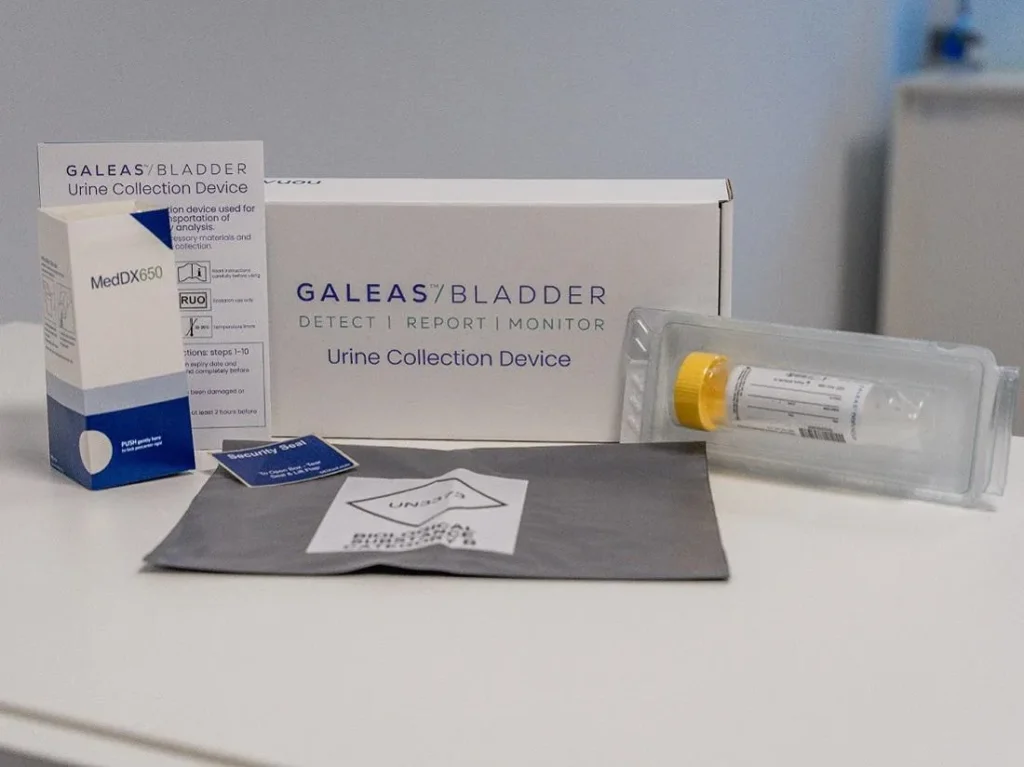
Study of 964 patients across seven NHS urology units found that the test detected 71 of 77 bladder cancers (92.2%) among the nearly 1,000 patients. The study, led by the University of Birmingham and Nonacus Ltd, investigated the real-world significance of testing for bladder cancer using a commercially available urine test –  GALEAS™ Bladder, which tests genomic information from a patient’s urine for traces of bladder cancer.

The peer-reviewed results have been published in European Urology Oncology, and showed significant results for detecting cancer as well as its use as a screening tool.

GALEAS Bladder detected all 17 muscle-invasive bladder cancers (100%) and 35 of 36 high-grade cancers (97.2%) diagnosed during the study. Meanwhile, a negative result was associated with a 99.3% probability of not having bladder cancer.

For the 30% of patients in the study with blood in their urine but which was not visible to the naked eye (non-visible haematuria), GALEAS Bladder identified all bladder cancers (100%) with a negative result associated with a 100% probability of not having bladder cancer.

Professor Richard Bryan, Director of the University of Birmingham’s Bladder Cancer Research Centre and co-author of the study, said: “We have spent many years developing and evaluating the science behind detecting bladder cancer through DNA in urine with support from Cancer Research UK and philanthropists, ultimately leading to the development of the GALEAS Bladder test by Nonacus. This prospective study shows that the very promising early performance has now been reproduced across multiple NHS centres and in a large real-world patient population.

“GALEAS detected 35 of 36 high-grade cancers and every muscle-invasive cancer diagnosed in the study. These results show that molecular urine testing can be used now to help clinicians decide which patients need an urgent cystoscopy and which can safely have that procedure deferred.

“The results are very significant for clinical practice. Only 8% of patients in the study were ultimately diagnosed with bladder cancer, which highlights the challenge facing NHS haematuria services where large numbers of patients currently enter the same urgent diagnostic pathway despite most not having cancer. GALEAS is a promising and less invasive test that can be easier to administer and make testing and screening for bladder cancer far easier.”

The GALEAS test was used in the study alongside a typical way to test for bladder cancer using a technique called cystoscopy. In a cystoscopy test, a camera is passed through the urethra to examine the bladder. The procedure is an important part of bladder cancer diagnosis, but Professor Bryan, a former clinical urologist, notes that the procedure is invasive and resource intensive.

GALEAS Bladder uses DNA found in a urine sample to help clinicians identify patients at greater risk who should be prioritised for urgent cystoscopy, while allowing cystoscopy to be deferred for some patients at lower risk where clinically appropriate.

Lee Silcock, Co-founder and Chief Product Officer at Nonacus and co-author of the study, said: “Seeing GALEAS perform so strongly across almost 1,000 patients in seven NHS urology departments is extremely encouraging. This is real-world evidence from the patients and pathways the test has been designed to support.”

“What matters most is identifying those most likely to have cancer sooner, while giving clinicians confidence when deciding which patients can safely wait for a cystoscopy. The fact that the test detected every muscle-invasive cancer in the study, alongside a negative predictive value of more than 99%, gives us further confidence in the role GALEAS can play in supporting NHS diagnostic pathways.”

The study also found that incorporating urine-based testing in bladder cancer pathways could reduce the burden on urology departments. At the most cautious pre-specified clinical threshold, using GALEAS Bladder to triage patients was estimated to result in 730 fewer urgent cystoscopies for every 1,000 patients, compared with urgent cystoscopy for everyone, with no loss of net clinical benefit.

GALEAS Bladder is already being used within NHS pathways in England and Wales, with further NHS sites adopting the test as clinical use expands.

Drug to delay Type 1 Diabetes approved by NICE

Diabetes experts from across Birmingham Health Partners have welcomed the approval of teplizumab for use on the NHS, following an announcement by the National Institute for Health and Care Excellence (NICE).

The immunotherapy drug can delay the progression to symptomatic type 1 diabetes in people who are in stage 2 of the condition, and will now be available through the NHS for children over 8 years and adults with Stage 2 Type 1 Diabetes.

The NICE announcement follows work by academics and clinicians to improve the support available for children and young people who go onto develop type 1 diabetes. At BHP – via founding members the University of Birmingham, Birmingham Women’s and Children’s Hospitals and University Hospitals Birmingham NHS Foundation Trusts – research is ongoing through a screening programme which can help to identify young people at risk of the condition.

The ELSA (EarLy Surveillance for Autoimmune diabetes) study, led by Professor Parth Narendran, has seen thousands of young people screened for antibodies that act as markers for whether type 1 diabetes will develop later in life.

Today’s announcement recognises the crucial role that screening programmes, including ELSA, will have for identifying young people who will benefit from Teplizumab.

ELSA has also enabled patients to have early access to Teplizumab, with the first young person in the UK, 14-year-old Sam from Kings Norton, receiving the drug at Birmingham Children’s Hospital under the care of Dr Renuka Dias and her specialist team at the Clinical Research Facility. Now, with the approval for funded use on the NHS it is estimated that around 1,100 people could be eligible for teplizumab in the first year-based data provided from the ELSA study.

Parth Narendran, Professor of Diabetes Medicine at the University of Birmingham said: “Today’s NICE recommendation for teplizumab marks a significant milestone in the UK for people at the very earliest stages of type 1 diabetes.

“As the first disease-modifying therapy shown to delay progression to clinical, insulin-requiring type 1 diabetes, teplizumab has the potential to transform the treatment paradigm from reacting to disease onset to intervening earlier in the disease process. This means that patients identified early, for example through the ELSA study led by the University of Birmingham, will have benefit from treatment that can give valuable additional years free from the daily burden of managing type 1 diabetes.

“This decision will go a long way to help the development of screening, monitoring and prevention pathways that will underpin the future of type 1 diabetes care.”

Type 1 diabetes is an autoimmune condition that causes the body to attack and destroy insulin-producing cells in the pancreas. Without insulin, blood glucose levels rise dangerously, and, without treatment, death. Diagnosis often comes suddenly and in crisis – one in four children in the UK are diagnosed in diabetic ketoacidosis (DKA), a life-threatening emergency caused by extremely high blood glucose levels and requires emergency treatment in hospital.

Teplizumab targets the immune system’s attack on insulin-producing beta cells in the pancreas. By modulating the immune response, it can delay the onset of clinical type 1 diabetes in people who are in stage 2.

Clinical trials have shown that a single course of teplizumab, which is administered in hospital daily for 14 days, can halve the progression rates to symptomatic type 1 diabetes.

Following today’s announcement, NHS will need to develop new testing and treatment pathways to make teplizumab available in practice.

Work is already under way to help build this infrastructure. The ELSA study, which is  co-funded by Diabetes UK and Breakthrough T1D, demonstrated what childhood screening for type 1 diabetes might look like in the real world.

A second phase, ELSA 2, was launched with £1.5 million in funding and has expanded screening to all children aged 2 to 17 across the UK and aiming to recruit a further 30,000 children.

ELSA 2 will also establish new NHS Early-Stage Type 1 Diabetes Clinics, providing families with clinical and psychological support and creating a clear pathway from screening through to diagnosis, monitoring and treatment.

Dr Renuka Dias, a Consultant Paediatric Endocrinologist working at Birmingham Women and Children’s Hospital and is an Honorary Associate Clinical Professor at the University of Birmingham and the Lead Paediatrician for the ELSA study.

Dr Dias said: “The approval of teplizumab by NICE offers people with early-stage Type 1 Diabetes to delay the need for insulin potentially for several years and represents a genuine step-change in how we think about the management of this relentless condition and hope that in time we can move closer to managing Type 1 diabetes without insulin as the first-line therapy.”

The announcement that teplizumab will be available on the NHS will give young people and adults more time to prepare for living with type 1 diabetes, with trial data suggesting that the drug can delay the onset of symptomatic diabetes by an average of 2.5 years.

As well as teplizumab, academics at the University of Birmingham are researching other ways to preserve the cells that produce insulin in the pancreas, and which are lost in type 1 diabetes.

Colin Dayan, Professor of Clinical Diabetes and Metabolism is collaborating with colleagues across the UK in the Type 1 Diabetes Immunotherapy Consortium to conduct clinical trials in adults and children with new-onset type 1 diabetes and develop new approaches to beta cell preservation and ultimately aim to find ways to manage type 1 diabetes without the need for insulin dependency.

Professor Dayan said: “This is such an exciting moment – it is the first step towards treating type 1 diabetes without insulin. Teplizumab delays the need for insulin by more than 2 years. Many other drugs have also shown promise in slowing the damage to insulin making cells by the immune system. As we pick up more cases early by screening and combine treatments to retain the body’s insulin making cells for longer and longer, we can foresee the day that insulin treatment in children becomes a thing of the past.”

NIHR funds life-saving treatments and faster diagnosis at BWC

Funding of £1.5m has been awarded to BHP founder-member Birmingham Women’s and Children’s NHS Foundation Trust – enabling quicker access to life-saving treatments and faster diagnosis of rare and infectious diseases. 

This National Institute for Health and Care Research (NIHR) funding boost will be used for two crucial initiatives: building a specialised Aseptic Pharmacy Unit for clinical trials, which has been designed to prepare medicines which must be used quickly; and to purchase a Nanopore genetics sequencer. This equipment can read much longer stretches of genetic code than before, which speeds up and improves diagnosis and testing of new treatments.

Professor Jeremy Kirk, Director of Research and Development at the Trust, said: “This is a true game changer in the world of research and will give our patients access to more clinical trials. 

“The Trust is nationally recognised for its contribution to genetics, and collaborative research working with partners across the region and beyond. 

“This funding will allow our teams to enhance current genetic testing (whole genome sequencing) by reading longer sections of the DNA that makes up the genome, moving from so-called short to long-read technologies. This shift will allow detection of genetic variants that would otherwise remain undetected, leading to faster diagnoses and earlier access to targeted treatments for our patients.” 

The equipment will also increase the number of trials delivered in the area in partnership with commercial sponsors such as pharmaceutical companies. 

The Trust is host to the Central and North West Midlands Commercial Research Delivery Centre (CRDC). This consists of a network of hospitals, community and GP sites which are paired with commercial partners to host clinical trials leading to faster set up.  

Jeremy added: “Expanding the number of patients eligible for clinical trials through rapid analysis of their entire genetic code, and improved pharmacy services will also increase our opportunities to collaborate with commercial partners. This includes the development of innovative treatments such as cell and gene therapies including editing for rare diseases and cancers, and the delivery of new, pioneering treatments to those who need them most.” 

National childhood type 1 diabetes screening could prevent thousands of emergency diagnoses, Birmingham study shows

A landmark UK study led by researchers at BHP founder members the University of Birmingham – which involved tens of thousands of families – has shown that childhood screening for type 1 diabetes is effective, laying the groundwork for a UK-wide childhood screening programme.

Results from the first phase of the ELSA (EarLy Surveillance for Autoimmune diabetes) study, co-funded by charities Diabetes UK and Breakthrough T1D, are published today in The Lancet. 

The findings mark a major step towards a future in which type 1 diabetes can be detected in children before symptoms appear. Currently, over a quarter of children with type 1 diabetes don’t receive a diagnosis until they are already in diabetic ketoacidosis (DKA), a potentially fatal condition that requires urgent hospital treatment. Early detection can dramatically reduce emergency diagnoses and could give children access to new immunotherapy treatments that can delay the need for insulin for years.

Launched in 2022, ELSA is the first UK study of its kind, and tested childrens’ blood samples for autoantibodies – markers of type 1 diabetes that can appear years before symptoms.  

We know that risk rises sharply with the number of autoantibodies. Children without autoantibodies are unlikely to develop type 1 diabetes, while those with one autoantibody have a 15% chance of developing the condition within 10 years. Having two or more autoantibodies indicates the immune system has already started attacking the insulin-producing cells in the pancreas and it is therefore almost certain these children will eventually need insulin therapy. This is known as early-stage type 1 diabetes.

Among the 17,283 children aged 3-13 years who were screened for type 1 diabetes risk at the time of analysis: 

  • 75 had one autoantibody, signalling increased future risk. 
  • 160 had two or more autoantibodies but did not yet require insulin therapy, indicating early-stage type 1 diabetes. 
  • 7 were found to have undiagnosed type 1 diabetes with all needing to start insulin immediately.  

Families of children found to have early-stage type 1 diabetes received tailored education and ongoing support to prepare for the eventual onset of type 1 diabetes symptoms and to ensure insulin therapy can begin promptly when needed, reducing the chances of needing emergency treatment. Those with one autoantibody also received ongoing support and monitoring.

Some families were also offered teplizumab, the first ever immunotherapy for type 1 diabetes, which can delay the need for insulin by around three years  in people with early-stage type 1 diabetes. The first patient was treated at Birmingham Children’s Hospital, demonstrating the hive of cutting-edge diabetes activity in and around Birmingham Health Partners and the Birmingham health and life sciences district. Teplizumab was licensed by the Medicines and Healthcare products Regulatory Agency (MHRA) in the UK in August 2025, and is currently being assessed by the National Institute for Health and Care Excellence (NICE) to determine whether it should be available through the NHS.

As of November 2025, more than 37,000 families had signed up to the ELSA programme and, building on this strong foundation, the second phase of the research launches today. ELSA 2 will expand screening to all children in the UK aged 2-17 years, with a focus on younger children (2-3 years) and older teenagers (14-17 years). The research team aims to recruit 30,000 additional children across these new age groups.

ELSA 2 will also establish new NHS Early-Stage Type 1 Diabetes Clinics, providing families taking part in the study with clinical and psychological support and creating a clear pathway from screening to diagnosis, monitoring and treatment.

Amy Norman, 44, from the West Midlands, was diagnosed with type 1 diabetes at the age of 13. She recently discovered via the ELSA study that her 11-year-old daughter, Imogen, is in the early stages of type 1 diabetes but has been able to slow its progression as the second child in the UK to access a breakthrough immunotherapy drug – teplizumab. She said: “Being part of the ELSA study has helped us as a family to prepare for the future in a way we never expected. Knowing what’s coming – rather than being taken by surprise – has made an enormous difference to our confidence and peace of mind.

“When I was diagnosed, I had no warning and ended up quite poorly in hospital with diabetic ketoacidosis (DKA). When Imogen’s diagnosis arrives, we hope that having this awareness will reduce her chances of experiencing DKA and the added trauma that comes from a sudden illness.

“Imogen took part in the study to further research and help others, but it has helped her too – being forewarned is being forearmed. She was always going to develop type 1 diabetes, but through ELSA we’ve been able to slow down the process and prepare – we know what is coming, but we’re not scared.” 

Lead researcher, Parth Narendran, Professor of Diabetes Medicine at the University of Birmingham, said: “We are extremely grateful to all the families who have participated in the study and generously given their time to help understand how a UK-wide screening programme could be developed. Together with Diabetes UK, Breakthrough T1D and NICE, we are working towards a future where type 1 diabetes can be detected in a timely manner, and families appropriately supported and treated with medicines to delay the need for insulin.

“We are also grateful to partners across the Birmingham health and life sciences district and beyond as well as the NIHR for the support they have provided in getting us to where we are.”

Dr Elizabeth Robertson, Director of Research and Clinical at Diabetes UK, said: “For too many families, a child’s type 1 diabetes diagnosis still comes as a frightening emergency. But that doesn’t have to be the case. Thanks to scientific breakthroughs, we now have the tools to identify children in the very earliest stages of type 1 diabetes – giving families precious time to prepare, avoid emergency hospital admissions, and access treatments that can delay the need for insulin for years.

“The ELSA study, co-funded by Diabetes UK, is generating the evidence needed to make type 1 diabetes screening a reality for every family in the UK. We’re incredibly grateful to the 37,000 families who’ve already signed up and urge others to get involved. Together, we can transform type 1 diabetes care for future generations.”

Rachel Connor, Director of Research Partnerships at Breakthrough T1D, said: “This is about rewriting the story of type 1 diabetes for thousands of families. Instead of a devastating emergency, we can offer time, choices, and hope. By finding children in the earliest stages, we’re not just preparing families, we’re opening the door to treatments that can delay the need for insulin by years. That extra time means childhoods with fewer injections, fewer hospital visits and more normality. Thanks to research like ELSA, what once struck as an unexpected crisis can become an actively managed healthcare process, changing the course of T1D for the better.”

The Research FIRST team at Birmingham Health Partners has played a pivotal role in the successful delivery of the ELSA study. Drawing on extensive specialist expertise, the team developed and implemented a robust, resilient database to support high-quality data capture and long-term study integrity.

Beyond technical delivery, the team also provided dedicated data management support throughout the project, ensuring rigorous standards, regulatory compliance and operational efficiency. They also offered oversight across key project activities, working closely with participating sites to support recruitment and ensure timely follow-up.

The team’s co-ordination and proactive problem-solving were instrumental in keeping the study on track. A further major achievement was the end-to-end management of dry blood spot testing kit dispatch, enabling sites to begin screening as quickly as possible after families signed up. This comprehensive project management has been critical in maintaining momentum and supporting the continued success of the study, enabling researchers to continue their work with confidence.

The findings from ELSA’s first phase signal a major step towards a future in which type 1 diabetes can be detected early, managed proactively, and potentially delayed through immunotherapy. ELSA demonstrates that childhood screening in the UK is feasible, acceptable to families, and capable of preventing emergency diagnoses. Continued research through ELSA 2 will assess how screening can be scaled across the NHS and evaluate its cost-effectiveness.

Type 1 diabetes is a serious and lifelong autoimmune condition affecting up to 400,000 people in the UK. It is caused by an immune system attack on the insulin-producing cells in the pancreas, meaning they can no longer make enough insulin. Rapid diagnosis of type 1 diabetes is essential to avoid life-threatening complications. 

For more information about ELSA or ELSA 2, visit elsadiabetes.nhs.uk/taking-part/.